
An Interview with Brittany Johnson, Author of Deadly Ever After
Author Interview #18
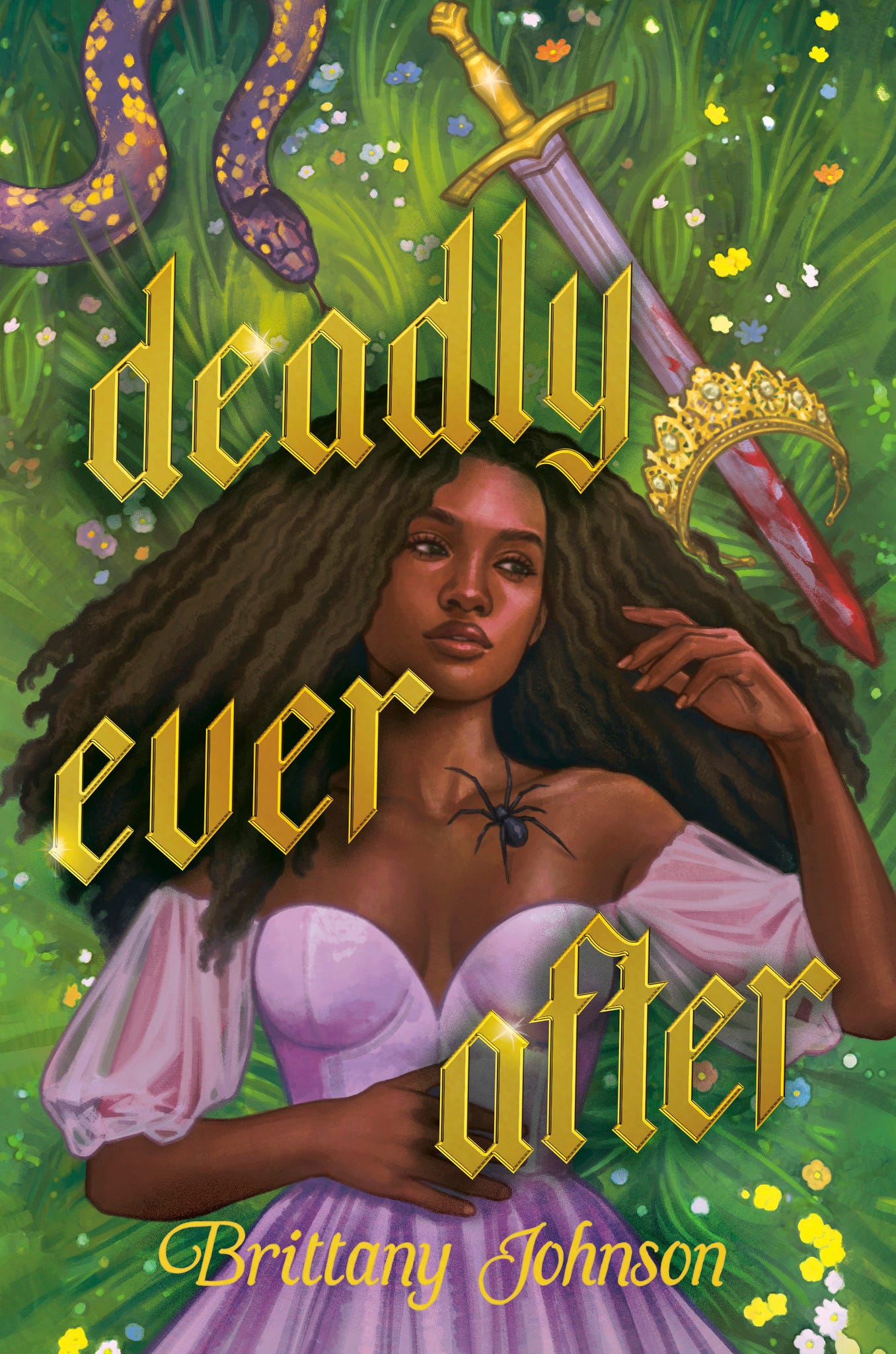
Brittany Johnson is a debut author who loves fairy tale adaptations that let Black women be the stars of the show, luxurious dresses, and books that encourage people to be their authentic selves.
Where did the idea to do TikToks in princess dresses to promote your books come from? Also, any shops or online stores for dress, fabric, or accessories you wanna shout-out?
Brittany: HAHA. Well, truthfully, I am known for my longstanding grudge against Canva. So much of author-led book marketing happens on that very intuitive (and useful) app, but transparently, I’d rather try to mop up rain than be stuck in Canva for more than a few minutes of my day. I’m a fairly unserious person, and I have no problem embarrassing myself, so my options were to either do a freestyle rap about the book (and no, I’m not a rapper) or use my bountiful stock of princess memorabilia to peddle my books on foot. Booth time was too expensive (I checked), so the decision was clear. I got my dress from Morning Lavender, a boutique in OC, California. I originally bought it to meet my editor in NYC, but I didn’t feel like dragging the train of the dress around the city, so I saved it for my headshots and eventually for this video.
You wrote a romantasy, so I gotta do it to you: what is your favorite romance trope and your least favorite?
Brittany: I love and hate this question because I’m greedy. I don’t have a favorite because I love so many equally the same. I love slow burn. I adore instalove. I eat up enemies to lovers. I swoon at friends-to-lovers. I am such a lover girl and romantic that it’s very hard for me to dislike a romance trope…but it is possible. My least favorite by far is Elder God/demon/monster falls in love with a 16-year-old girl. I have my exceptions to this rule, but they have to be executed extremely well, or else it feels off-putting to me. Really, as long as I can see that two characters have chemistry, genuinely love one another, and no component of mistreatment or manipulation leads to them loving one another…I’m in. Sign me up.
Serena; Honestly, same. Execution is what matters most
What is the difference between a romantasy, a romantic fantasy, and a fantasy romance?
Brittany: For me, it’s all in how romance plays out in the plot. In my eyes, in romantasy, the romance is so intrinsic to the plot that the story can’t really exist without it. I consider DEADLY EVER AFTER to be a romantasy, because the romance isn’t a subplot. It’s the core part of the hook and the characters’ missions. Whereas a romantic fantasy or a fantasy romance prioritizes one over the other. Romance may be a subplot, or the fantasy may be a backdrop to the characters’ romance. Romantasy melds them together (and it’s easier on the tongue).
What princess, from any story or studio or author, have we all completely misunderstood?
Brittany: Who comes to mind the quickest is Cinderella. I think so often people lump Cinderella (in any version of her tale) into a category where she’s a princess who lacks self-agency outside of romance. While all her problems do get solved with glass Gucci pumps, I think it’s unfair to erase that for most of her story, she wanted to break away from an abusive household where every room is a reminder of her grief and loss. Cinderella, to me, has always been a victim of her circumstances in a much more nuanced way than people allow her to be, but I think that’s a problem with fairy tales as a whole.
I think that when people think of love, princesses, and fairytales, they’re automatically imagining a woman who is only waiting for true love and who doesn’t know she can want more. While this is true in some stories and narratives, it’s also false in many others. We’ve seen an uptick in the past decade-plus, where princesses are taking charge of their lives, and I love that. DEA was created from the middle of that pendulum swing. I wanted to have a conversation about how hard it can be to save yourself, and how sometimes you’re not always able to do that. Cinderella, for me, is a great example of that nuance. Yes, marriage was the glue that fixed all her problems, and I think there will always be worthy criticism there, but let’s not pretend that she was pathetic, weak, or anything but a resourceful, resilient dreamer who refused to close her heart even when it would have been the “smart” thing to do. It’s very tricky and nuanced.
Serena: Completely agree. Cinderella is a story of abuse and she does deserve more empathy.
Between Amala and Kha’dasia, who did you find it easier to get inside the POV of?
Brittany: It depended on my mood. Amala is so much softer than Kha’dasia, so on days when I was feeling that softness in my heart, it was that much easier to step inside her head. Kha’dasia has the kind of snark that can only come with being a deeply fragile person with a lot of built-up resentment and turmoil…and when the shoe fit, her voice sang to me.
In the modern age, so many of us are having deeply complex relationships with religion as a whole and the place of faith in our lives and where it all fits in our duties to other people. There was a really interesting line in the book that I want to talk about: ‘Religion and faith are neutral. Man isn’t.’ Do you mind expanding on that line further?
Brittany: Yes! Religious trauma is very real because of the actions that we as human beings take, thinking it’s excusable because of our beliefs. I don’t think religion and theology need to be the enemy, and that’s something I had to realize early on in my therapy days.
Someone close to my heart says all the time that the worst part about a religion is the followers, and I think it’s true. A book, message, or story is all up to interpretation by man, and we’re deeply flawed individuals who can’t help but see the world through our very skewed lenses. I think people interact with life in a way that confirms their own internal biases, and that there’s something beautiful about every religion, theology, spirituality, and faith. What isn’t beautiful is how we weaponize those things in ways that hurt our community. The number of times I’ve seen people with religious passages and texts in their social media bios go out of their way to bully others online and wish harm on them is ghastly. And, oftentimes, people will blame their bigotry, hateful views, and harm on a religious text. It’s not the words on the page that make belief real. It’s what’s in our hearts. It’s the actions we take, and I think it’s important not to spiritually bypass harmful behavior because of that. We have the power of free will and choice, and we must remember that when someone religiously harms us. Is it God who is the problem? Or man? Religious trauma is a doozy.
About halfway through the book, there is a discussion about the right to be angry at our situations and how anger is a valuable emotion and it’s connected to how anger is weaponized against young women, particularly Black women. As society shifts further and further towards demonizing showing any kind of emotion that isn’t happiness, I think young people today are really struggling with emotions in general, but especially the ones that will make them be seen as difficult and they’re hiding their actual feelings. What do you hope books like yours can do to tell young people that their feelings actually do matter?
Brittany: I was the young Black girl who was afraid to show her anger for a few different reasons. Half of it was trauma, and never witnessing a healthy display of anger, but also because I was already a weeping crybaby, and I saw how the world treated me because of that. I didn’t get the same courtesy that my emotional white friends got. I had principles who tried to deem me as emotionally immature, and call meetings with my mother; meanwhile, there were other kids in the same grade being way more of a problem than my tears could ever be. I know how it feels to be afraid of what will happen when emotions show, but we’re entitled to our emotions. We’re human. We need to cry and be angry just as much as we need to be joyful. To deny ourselves half of our emotional spectrum is to allow others to win. Black women and girls are consistently denied our humanity in so many ways. I hope Deadly Ever After and other books like it reminds them that they’re seen, loved, and heard, and that their emotions deserve to be respected.
I adored how locs and the name ‘D’asia’ being part of women’s names was integrated into the worldbuilding. Any other bits and pieces that didn’t make it into the book?
Brittany: There’s a lot of worldbuilding and history that never made it into the book, actually. We see glimpses of it, especially King Zahair and King Calvin’s relationship. There’s an entire backstory there that I’d love to explore, but it doesn’t quite fit into the vibe of Deadly Ever After. It’s very reminiscent of Mufasa (2024).
One of the biggest challenges faced was that the majority of the story takes place in The Garden, away from the real world. Thus, the amount that I could dive into real-world political intrigue, backstories, etcetera were limited. Additionally, the book is around 78K words, so it’s a shorter read, which means even less time to dig deep. I’d say the relationship between the two kings, where they go from brothers to enemies due to moral and political opposition, to reluctant allies, is one of the biggest chunks of lore that didn’t get explored. As far as the bits of worldbuilding that did survive, like D’asia and Kha’dasia’s locs, I wanted the worldbuilding to reflect my deep love for Black girl- and womanhood from all walks of life. Black American culture isn’t homogeneous and differs based on regionality, subcultures and intersections, generations, etc. I wanted to celebrate (and challenge) as many components of us, physically, emotionally, and geographically, as I could through the world-building.
YA is currently recalibrating as the age category is shifting to meet the needs of modern teens again, and this has led to a lot of conversations about how anyone can read YA, but we have to remember that the books are meant for teenagers. What positive changes are you hoping will happen in the age category as publishing tries new things?
Brittany: To preface this—I specifically started writing as a form of activism for the next generation. As much as I write for myself, I write for the youth, and my opinions and perspectives largely come from that place. I recognize that not everyone else is the same and respect it.
I think that writing YA is a blessing because the stories that are crafted hold so much power over how teens can be shown the world, their communities, and themselves. I don’t think my generation is uniquely different because of how we were shaped by literature; however, I think we’re a generation of adults at large who refuse to lose their whimsy and who are often calling back to their childhood due to the ways that we were neglected. It falls into the whole “do it for your inner child” mantra. When it comes to publishing, sometimes I do think that writing the books we needed when we were younger crosses over a threshold where we forget about the teens we’re writing for. It’s very peculiar behavior to see young adult authors bash Gen Alpha and younger Gen Z, when they’re the audience our books are for. Eventually, it starts to bleed into the books themselves.
We succeeded at maintaining our whimsy, but we’re grown, and sometimes it’s difficult to take the “adult” lens off. I would have never made half the decisions Amala or Kha’dasia did, but I’m 30. I know better. They don’t, and to write their experience accurately for the age group they’re targeted towards, I had to think about them first and not myself. Teens don’t have the wisdom of 30+ year old adults. Pretending they do results in comments where main characters are seen as “irresponsible” or “annoying,” when they’re just acting their age.
I also think we forget that young adult doesn’t start at 16. Lower YA, while seemingly not as upper YA, exists.
All this to say—I’d love to see publishing invest more in both younger YA and New Adult, so we can stop forcing books in an age group they don’t want to be in, thus making it harder for the books that do fit. I’ve had to completely shelve ideas because I knew I’d have to age up or down in ways that negated the heart of the story that I wanted to tell. I also hope that we, as authors, booksellers, agents, etc., listen to the generation we’re supposed to be writing for more and social media less.
We can, and do, enjoy young adult literature. I love it. It feels like home, but I also know I haven’t been a teenager for a long time, and there needs to be a happy medium between what they need and want to see, and what we love to write.
Since flowers come up often in the narration, what is your favorite flower and why?
Brittany: Peonies! I adore peonies. Truthfully, part of my desire to own a home is just so I can have a peony garden.
Peonies have a very special place in my heart. They’re very fragile and soft, but also incredibly tenacious and resilient. A few years ago, I had a cancer scare. Being young 20s, and having just experienced my first personal death within the year, I was shaken up. I went to a farmer’s market with my friends and bought a peony at a flower stand. The Florida heat was extreme that day, and we left the flower in the car as we went to a local theme park. When we came back, it had severely wilted. Once we made it back to my apartment, my friend and I threw it in some ice and made a makeshift frame to keep it upright. I swore it was going to crumble and die, but it didn’t. While the signs of wilt and damage remained, it perked back up and lived longer than I would have thought. That one flower made me feel so seen and understood as I waited for the results. The test came back negative, and the flower fully wilted not too long after.
Favorite song from the Cinderella musical starring Brandy?
Brittany: Oh, why would you ask this! I’ll give the top three in no order:
In My Own Little Corner
Impossible
Do I Love You Because You’re Beautiful
The book deals with the impact of abuse and I’m sure it made a lot of readers feel very seen. Is there anything you want to say to the readers who saw their own experiences mirrored in Kha’dasia and Amala’s story?
Brittany: Just that it gets better, but only if you decide you want it to.
When you’re stuck in an environment, whether it be your homelife, school, friend groups, whatever, where you have people telling you who you need to be to the world, to others, and yourself, it’s hard to envision charting your own path and carving your own identity. It’s not going to be easy. It’s going to be uncomfortable. Your heart will break realizing how many people failed you, but you’ll also come to appreciate those who didn’t. You’ll have moments where you’re tired from the constant personal growth and self-auditing, and become resentful when you think of all the people skirting through life without doing the same. You’ll cry and grieve, but you’ll also find so many pockets of joy and laughter. You’ll learn about your own power and open up doors to dreams you didn’t know you could hold. You’re entitled to the same happily ever after that everyone else is, but if you wait for it to come to you, it never will. You have to choose it every day, and then eventually one day you’ll wake up, look around, and see just how worth it it was.
When the journey starts, Kha’dasia is completely opposed to the idea of the happily ever after and Amala is quite sold on it, which kind of mirrors conversations around romance as a genre and why some readers cannot stand it and some love it. Any opinions on HEAs?
Brittany: I do think someone’s feelings about romance and HEAs are a self-report of their feelings about love, hope, and things getting better. Every time I talk to someone who doesn’t enjoy romance, it’s usually because it either highlights a lack of emotional or physical intimacy in their lives or they don’t see it as “relatable.” Sometimes, it’s easy to be bogged down by our own experiences. They become a box that’s designed to keep us safe from what happens when you dream too big, and those dreams fall through. Not to believe in love, enjoy romance, or allow yourself to be transported to a sweeter reality is a protection mechanism. I don’t fault people for it, but it does make me sad.
I believe HEAs are crucial for that very reason. Whether or not you believe in them for yourself is one thing, but I believe it’s important to show people with darker backgrounds so they know that it’s possible to make it out and find joy, love, and happiness. Maybe I’m biased because I don’t like being emotionally devastated or perpetually stressed out by my fiction (which is also a self-report in itself), but I think HEAs as an ideology, literary trope, and genre are so important—especially when we’re going through dark times.
There’s all kinds of advice out there in regards to the writing process, but I’ve found that the best thing to do is experiment with a lot of authors’ processes until you find a combination that works for you. What’s your process like?
Brittany: My process is whatever it wants to be that day. I wish I were joking, but it has changed so much that I don’t even feel like I can answer firmly. It shifts from project to project. You know how they say you can’t parent your children the same? That’s how writing is for me.
Deadly Ever After showed me every step of getting a book out of my head to being on the shelves. It’s the book that got me agented and made it easy to Google me. There was a lot of trial, error, and learning along the way, where the process kept shifting. Truthfully, I pantsed my way through most of DEA’s first and second drafts, and the rest is a blur up until publication.
Now that I have all this experience, I allow the process to be what it wants to be. It helps, since I also have ADHD. Sometimes I just jump into writing to see if a project has legs, and then I worry about the rest later. Other times, I build up playlists and think casually about them in my spare time before sending a text to my agent. The beginning process always looks different, but once I start writing, I like to keep writing. I’m not the writer who can start and stop. If I am writing, revising, etc., I need to keep going until I’m done. That means working 5 days a week, give or take, and ideally finishing at least a chapter per day. Once that’s done, I send it to my agent or beta readers for extra eyes, and then when I get it back, I do it all over again.
One part of my process worth mentioning is that I usually write my ideas a year or so after I had them. ADHD is essentially shiny new toy syndrome, and I’m an idea generator. It’s very easy for me to come up with concepts and ideas that I’m interested in, but that doesn’t necessarily mean I have the energy to write them out. The manuscript I’m working on currently, I came up with mid October 2024 while sitting on a train in Manhattan. I wrote the first chapter in January 2025 and didn’t actively start drafting until July 2025. For Deadly Ever After, I came up with the idea in November 2019 and didn’t start drafting until April 2020. This ensures I like the project enough to complete it. If I’m not able to do that, it’s not the project to focus on.
We talk a lot in writers’ spaces about how you have to read modern authors to be part of the conversation going on in our genres. What books is your book in conversation with?
Brittany: Cinderella is Dead meets Once Upon a Broken Heart
Author as Brand feels like a big part of being a writer these days. What do you want your Brand to be?
Brittany: Funnily enough, I work in marketing for my 9-5, and I love branding! I knew what I wanted my brand to be way before Deadly Ever After hit shelves.
I want my author brand to encapsulate that no matter what the headlines may look like, who you are, or where you come from, you deserve joy, love, and magic. I hope that the books, essays, and art that I create reinforces that dreams, no matter how large or small, are worth chasing. My tagline is “Happily ever after is now,” because I feel like it’s something you have to choose day in and day out. That, and that we have the power to live out our HEAs in our everyday lives, even if we don’t feel like it. Romanticizing the small things, honoring our emotions, and giving ourselves grace are all things we can do every single day of our existence.
Some authors focus on food, others on clothes. What’s your favorite way to show time and place/to worldbuild?
Brittany: Fashion and beauty! I spend maybe too much time focusing on the wardrobes of my characters and their hair. A large part of this is because I am a Black woman who writes books about Black girls, and beauty and fashion are such loaded topics for us. Our hair, skin, and clothing have been politicized for centuries. I take such pride and joy in being Black aesthetically that it becomes a very intentional and fun point of world-building for me.
Serena: I love that!
Are there any writers you wanna give a shout-out to?
Brittany: So many! A.K. Savage, Kamilah Cole, Alechia Dow, Steven Underwood, Skyla Arndt, Veronica Bane, Ray Stoeve, and debut authors Jasmine A. Smith and Noelle Monet!
Thank you so much, Brittany!
Where to follow for updates so you can order Brittany’s next book:
Where to buy:
Steamy Lit Bookstore - Tampa, FL
In Bloom Bookery - Temecula, CA
Reparations Club - Inglewood, CA
The New Romantics - Orlando, FL
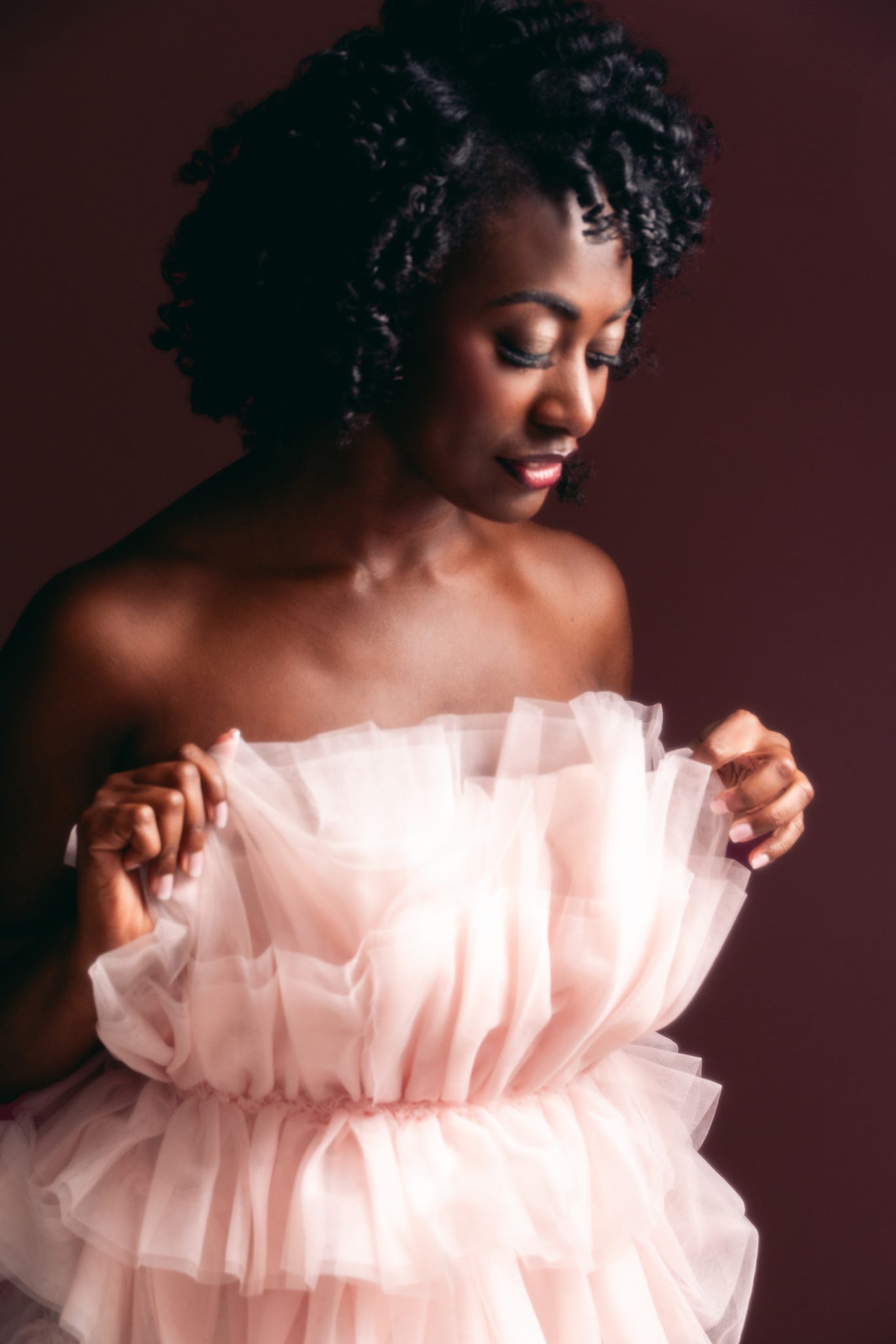
Brittany Johnson (photo by Anthony Bryce Graham)